User-centred design from research to working software
Keep real user needs at the centre of difficult product decisions. We help your team move from research to tested designs, refining the experience as you learn and making the reasoning clear to the people responsible for building and running the service.
What you can expect
- Design priorities tied to evidenced user needs
- Prototypes refined through feedback and testing
- Documented decisions and designs for implementation
Senior specialists in engineering, design and delivery.
How we assure qualityWhat we can help with
- Research-led design
- Information architecture
- Interaction design
- Content design
- Prototyping
- Design iteration
Let evidence shape the product
Teams can agree that users matter and still make important decisions from habit or internal preference. User-centred design creates a practical way to challenge those assumptions: understand the task, explore a solution, observe people using it and refine the design.
This approach is valuable when you are replacing a familiar system, introducing a new service or designing for people with different needs and levels of digital confidence. It makes the reasoning behind the design available to stakeholders, rather than asking them to approve it on appearance alone.
Connect research to design decisions
We review existing evidence and identify gaps that could change the solution. Working with your product team and subject-matter experts, we turn those findings into user journeys, content and interaction designs.
Prototypes allow realistic tasks to be tested before the design is fixed. We look at points of confusion, missed information and difficulty recovering from errors, then decide what needs another iteration. Technical feasibility and accessibility are part of those discussions, not separate concerns deferred to the end.
The outputs can include an information architecture, tested prototypes and implementation notes. We explain which choices are supported by evidence, which are provisional and what should be checked once the service is in use.
A concrete change informed by users
Research for the King’s Awards for Enterprise showed that applicants were uncertain about eligibility. We introduced eligibility checkers and brought guidance into the application journey. Content designers participated in research sessions so the wording reflected the difficulties people experienced.
Six rounds of usability testing allowed the team to refine the service during development. The work demonstrates how user-centred design can change the structure and content of a product, as well as its interface.
How is this different from a UX design project?
UX design describes the work on the digital experience. User-centred design describes how evidence and feedback guide that work. Choose this service when you need a research-led process across the project; choose a focused UX engagement when the problem and evidence are already well understood.
Can we use research we already have?
Yes. We review its relevance, recency and coverage with your team before proposing additional research. If the evidence is sufficient, we can move into design. If a consequential assumption remains untested, a targeted research or testing activity can address it.
Experience in practice
Relevant work
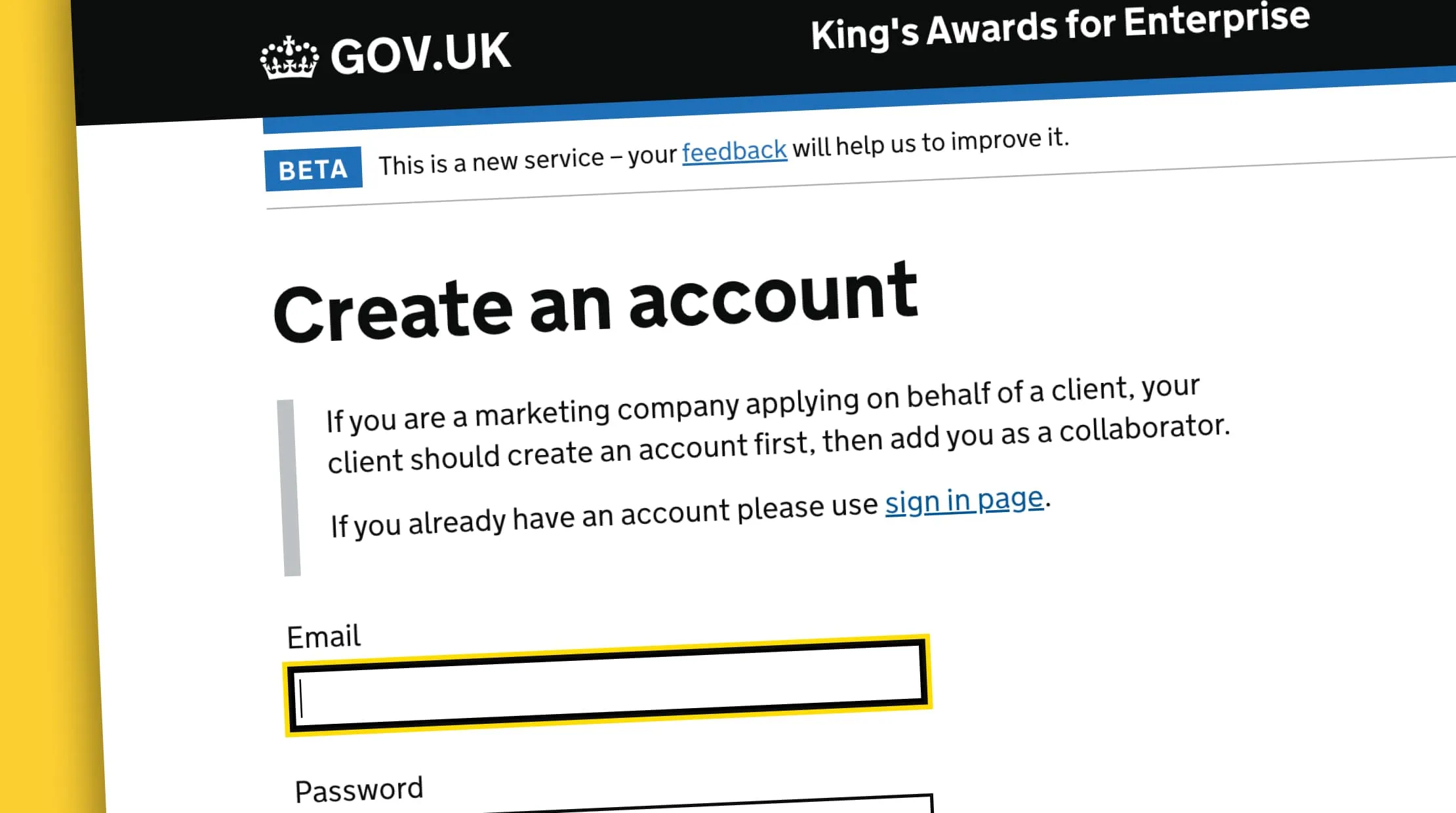
King's Awards for Enterprise
Streamlining the application process for the UK's most prestigious business awards
Through in-depth research, we rebuilt the service. The improvements met stringent government standards and made it easier for thousands of organisations to apply for the awards.
Government and CharitiesBusiness and Financial Services
Plan your next step
Share what you know about your users and the decisions still open. We’ll help connect research, design and testing into a practical engagement with your team.